updated: November 19, 2025
If you’re a tenant with a disability or a California landlord, understanding reasonable accommodation requirements is essential. Under both the federal Fair Housing Act and California’s Fair Employment and Housing Act (FEHA), landlords must modify policies and practices to provide equal housing opportunities for disabled individuals.
Whether you’re a tenant seeking accommodation or a landlord ensuring compliance, this guide provides the legal framework and practical steps you need.
**Legal Disclaimer**: This article provides general information about reasonable accommodation requirements in California and should not be construed as legal advice. For guidance on specific situations, consult with a qualified California real estate attorney or contact the California Civil Rights Department (formerly DFEH).

What is a Reasonable Accommodation Under California Law?
Reasonable accommodation under the Fair Housing Act refers to adjustments or modifications that are necessary to allow individuals with disabilities to enjoy and use their housing fully. ADA defines disability as “a physical or mental impairment that substantially limits one or more major life activities.” Under both the federal Fair Housing Act (42 U.S.C. § 3604(f)(3)(B)) and California’s Fair Employment and Housing Act (Government Code § 12927), landlords must provide reasonable accommodations to disabled tenants unless doing so would create an undue financial or administrative burden.
Reasonable accommodations in California are changes to housing rules, policies, or services that enable disabled tenants to have equal access to housing. Under California FEHA and federal Fair Housing Act, landlords must provide accommodations unless they cause undue hardship. Common examples include emotional support animals, accessible parking, modified payment schedules, and policy exceptions. Landlords cannot charge fees for accommodations.
What qualifies as a reasonable accommodation in California, and when can landlords legally deny accommodation requests? Understanding these boundaries protects both tenant rights and landlord interests.
Types of Reasonable Accommodations Landlords Must Provide
California landlords must provide various types of reasonable accommodations across three main categories: policy modifications, service adjustments, and physical accommodations.
- Policy and rule modifications are changes to standard rules, policies, or procedures that allow disabled tenants equal housing access. Landlords must provide these at no cost to the tenant. The most common example is waiving “no pets” policies to allow emotional support animals (ESAs) or service animals. This is the number one accommodation request in California. Under California law, no pet deposits or pet rent can be charged for ESAs or service animals, breed and size restrictions don’t apply (except truly dangerous animals), and landlords can only require verification from a healthcare provider if the disability isn’t obvious.
- Other policy modifications include parking accommodations such as assigned accessible parking spaces for tenants with mobility limitations, reserved parking closer to entrances for those who cannot walk long distances, and additional parking spaces for live-in aides. Lease and administrative accommodations include allowing live-in aides to reside with the tenant without being added to the lease, permitting remote lease signing for mobility-impaired tenants, and allowing flexible application processes for tenants with disabilities affecting application completion.
- Service and communication adjustments involve changing how the landlord communicates with or provides services to the tenant, also provided at no cost. Payment accommodations include monthly rent payment reminders via calls, texts, or emails for tenants with memory impairments, breaking rent into bi-weekly payments for tenants whose disability affects income scheduling, and accepting electronic payments instead of in-person delivery.
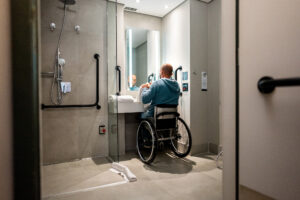
- Physical accommodations involve changes to the physical property, where cost responsibility varies. Minor physical changes that landlords typically pay for include visual fire and smoke alarms with strobe lights for hearing-impaired tenants, lowering existing fixtures like mailboxes or peepholes, installing grab bars in bathrooms for tenants with mobility issues, and replacing round door knobs with lever-style handles for tenants with arthritis or limited hand dexterity.
- Major physical modifications that tenants typically pay for (but landlords must allow) include wheelchair ramps, widening doorways to 32 inches or more for wheelchair accessibility, bathroom remodeling with roll-in showers and lowered sinks, and kitchen modifications such as lowered countertops. A critical California exception exists: if your property receives federal funding, landlords may be required to pay for structural changes under different regulations.
California law is clear that reasonable accommodations cannot involve fees or deposits. Landlords cannot charge accommodation request processing fees, pet deposits, or pet rent for ESAs or service animals, permission fees for allowing modifications, administrative costs for policy exceptions, or monthly surcharges for ongoing accommodations. However, landlords can charge standard security deposits not specific to the accommodation, and the actual costs to restore the property after major tenant-paid modifications, if restoration is required.
How to Request a Reasonable Accommodation in California
Requesting a reasonable accommodation in California involves following specific procedures to ensure your request is properly documented and legally compliant. Before making a request, clearly identify your disability in general terms (no need to disclose specific diagnosis), the specific accommodation you’re requesting, how the accommodation relates to your disability, and why the accommodation is necessary for equal housing access.
Verbal requests are legally valid under California law. Still, written requests are strongly recommended because they create documentation of when the request was made, trigger the landlord’s legal obligation to respond within 30 days, and provide evidence if disputes arise later. Acceptable methods include email (keep a copy with timestamp), written letter delivered in person (get receipt signature), certified mail (recommended for maximum documentation), or property management portal messaging (screenshot for records).
Your written request should include several essential elements:
- Start with a clear subject line, such as “Request for Reasonable Accommodation Under Fair Housing Act and California FEHA,” stating that you are requesting a reasonable accommodation under the federal Fair Housing Act and California Fair Employment and Housing Act.
- Clearly describe the specific accommodation you’re requesting with as much detail as possible.
- Explain that you have a disability as defined under federal and California law, and briefly explain how the accommodation relates to your disability without providing unnecessary medical details.
- Mention if you’re attaching supporting documentation or state your willingness to provide verification if needed.
- Include a statement requesting that the landlord acknowledge receipt within 10 business days and provide a substantive response within 30 days as required by California law.
- Provide your contact information and express willingness to discuss the request further.
- Keep copies of everything: your accommodation request letter, proof of delivery, the date and time of submission, any healthcare provider verification included, and all subsequent communications with your landlord.
California landlords can request verification if your disability is not obvious or already known to them. Acceptable verification includes a letter from a licensed healthcare provider, therapist, doctor, or psychiatrist, or a statement from a social worker. The verification should confirm you have a disability as defined by law, state that the accommodation is disability-related, and confirm the provider has personal knowledge of your condition. Landlords cannot request detailed medical records, specific diagnosis details, treatment plan information, or online “ESA certifications” or “registrations.”

If your request is denied, the landlord must provide a written explanation with specific legal justification, citing either an undue financial or administrative burden, a fundamental alteration to operations, or no nexus between the disability and the accommodation. The landlord must still engage in the interactive process to discuss alternative accommodations. You have the right to file a complaint with the California Civil Rights Department (formerly DFEH) within one year or with HUD within one year, or you can file a lawsuit in civil court within two years under California law.
If your landlord fails to respond within 30 days, doesn’t engage in good-faith interactive process, denies your request without valid legal justification, or retaliates against you for making the request, you should document everything in writing, send a follow-up letter citing California’s 30-day requirement, consider filing a formal complaint with the California Civil Rights Department or HUD, and consult with a fair housing attorney about your rights. Many attorneys offer free consultations for Fair Housing cases, and if you win, landlords typically pay your attorney’s fees.
Understanding reasonable accommodation requirements is essential for California tenants and landlords. Tenants with disabilities should be aware of their rights to request necessary adjustments, while landlords need to understand their legal obligations to create inclusive environments.
Both parties must stay informed about state-specific regulations, including response timelines and broader disability definitions. Effective communication is key to managing accommodation requests.
Need Help with Fair Housing Compliance?
Navigating reasonable accommodation requests and California’s Fair Housing laws can be complex. One mistake could cost you $4,000 to $75,000 in penalties. Real Property Management California Coast understands Fair Housing compliance, handles accommodation requests, supports interactive processes, and assists with all required documentation to keep you fully compliant.
Protect your investment and avoid costly violations. Contact us online or call 310-535-2150 today for a free property management consultation and discover how we make El Segundo landlord compliance stress-free.